Beaver exclusion from part of their habitat
Excluding beavers from a part of their habitat may be considered in case of damming, burrowing, or foraging impacts, such as gnawed vegetation, damaged hydraulic structures, or a lodge/ burrow in an unwanted location. This measure requires maintenance and could be labour intensive.
Page content
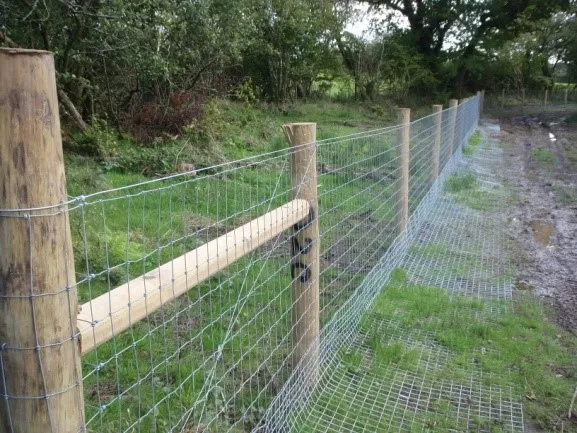
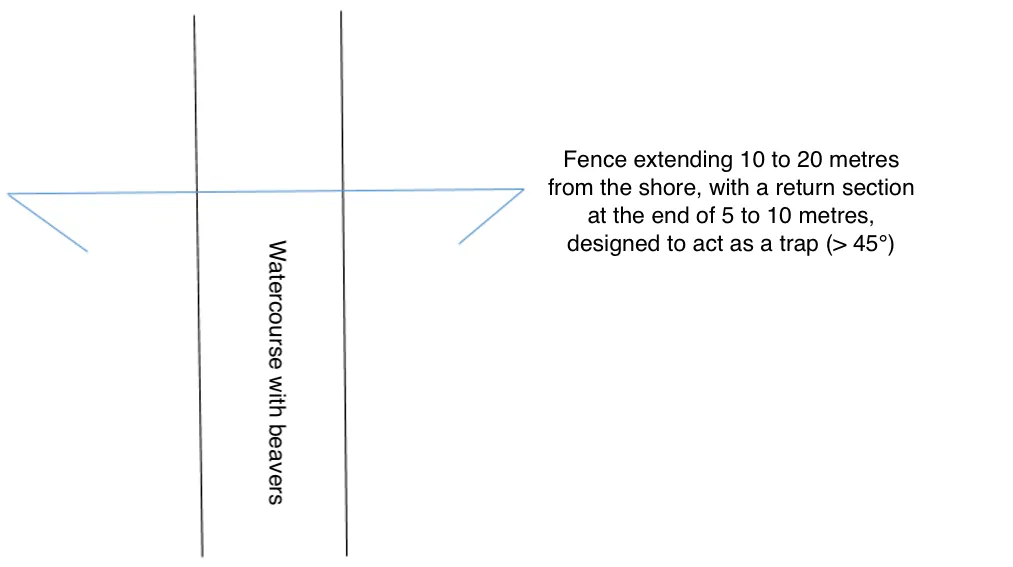
To prevent impact from foraging, damming, or burrowing, beavers can be excluded from a part of the area by placing a beaver-proof fence in narrow waterways (Figures 1 and 2). This fence should close the complete water column and the floor of the waterway to prevent beavers from digging their way underneath the fence. The fence should continue on the riverbanks, stretching to at least 10 to 20 metres on each side of the river, to prevent beavers from walking around the fence. On the beaver-side of the fence we recommend creating a trap-shaped end of the fence to stimulate beavers to walk back to where they came from. The trap-shape should consist of a 5 to 10 metre fence connected to the main fence at a 45 degree angle.
Fence specifications
- Height: minimum 1.2 metres above ground/water level.
- Mesh size: maximum 15 x 15 cm.
- Wire thickness: at least 2 mm.
- Anti-digging protection:
- Mesh should extend 30 cm over the ground on the beaver side.
- Optionally, bury 20 cm of the mesh into the ground for added security.
Multiple waterways?
In case there are multiple waterways providing access to the area, all these channels must be blocked with excluding fences. Therefore, this method could be quite laborious in some cases.
Beavers are persistent
In case the excluded area was once part of the beavers’ habitat, the beavers will be persistent in making efforts to access the excluded area. This could result in beavers walking further than usual and going around the fence. Especially in these cases the trap-shaped end of the fence is recommended.