
Beaver exclusion using fencing
When a lodge or burrow in an unwanted location causes damming or burrowing impact, or vegetation is impacted by foraging, beavers could be excluded from an area on land with mesh fencing. This measure required maintenance.
Page content
Placing a mesh fence
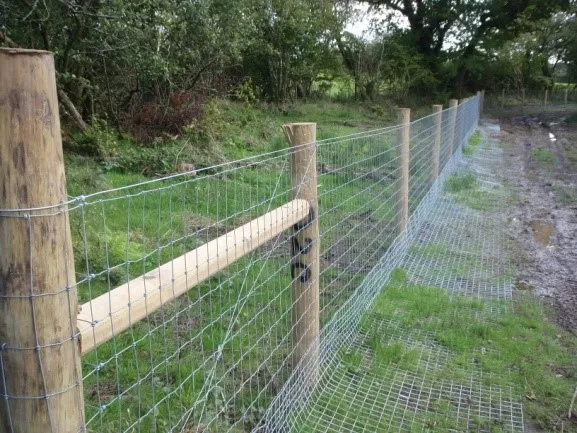
Beavers can be excluded from certain areas on land by placing mesh fencing, to prevent (further) damage by their activity (Figure 1). To effectively exclude beavers and prevent burrowing or damage, fences should meet the criteria below.
Fence requirements
- Minimum height of 1.2 metres above ground.
Extend mesh 30 cm horizontally on the beaver side to prevent digging.
This horizontal mesh should be secured with ground pins.
- Additionally, the fence can be buried 20 cm into the ground to ensure stability.
- Maximum mesh size: 15 x 15 cm.
- Minimum wire thickness of 2 mm to withstand beaver activity.
The fences are most effective when constructed up to 20 to 30 metres away from the shore, and it is important to regularly check for damaged or weak spots to repair these timely.
Placing shock wire
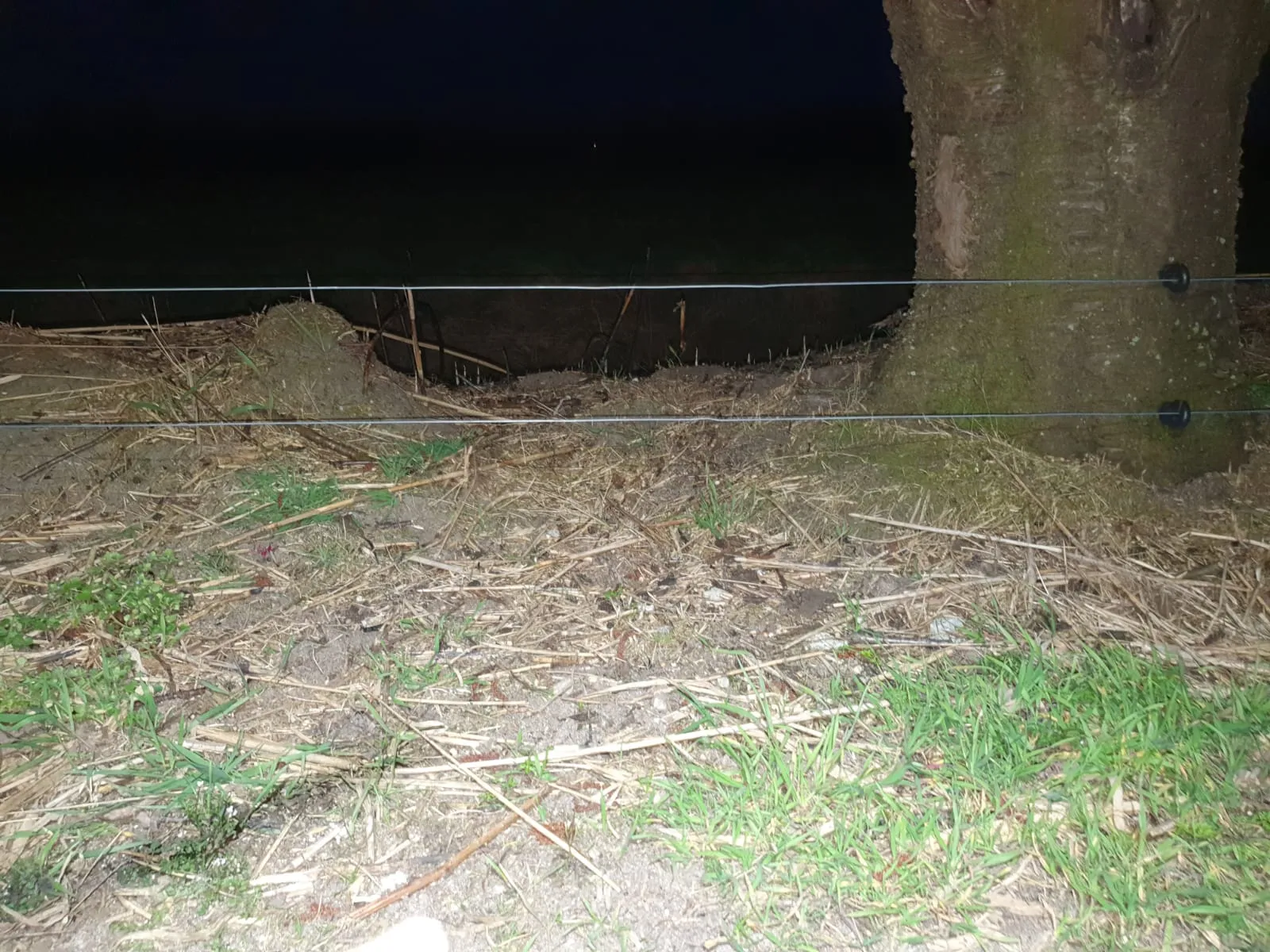
To prevent gnawing damage on trees or crops, shock wire could be used to exclude beavers from the plot. However, this method requires frequent maintenance, as the threads should not touch any vegetation to function properly. The lowest thread should not be higher than 15 cm above ground level, and a second thread should be placed at 25 cm above ground level.
Providing other locations and tree species
To prevent beavers from gnawing on trees and shrubs in a certain area, placing attractive tree species - such as willow and poplar - in other adjacent areas can help to create advantageous alternative locations within the beavers’ territory.
Please be aware that each country will have their own regulations and policies when using shock wire. For example, using shock wire has specific regulations in the United Kingdom, read more here. Please check with your country's or local authorities for more information.