
Disturbance of beavers
Disturbing beavers can be a measure when burrowing, damming, or foraging cause negative impacts, such as when a lodge or burrow is in an unwanted location, or when vegetation or hydraulic structures are gnawed on. This is a short-term solution, most likely requires permits and procedures, and needs additional measures to prevent repetition.
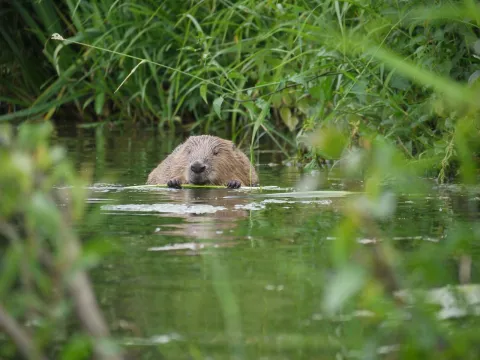
© W. de Koning
Page content
Disturbing beavers could serve as a short-term solution to prevent further impact. However, this most likely requires a permit, as beavers are a protected species across much of its range . In some emergency situations, immediate action could be taken, such as driving the beavers away by digging open their burrow or lodge. In such cases, it may be possible to arrange the required permit afterwards. Yet, whether a situation qualifies as an emergency is assessed by an authorised authority. Find more information on legislation here.
Repetition
Disturbing beavers is only a short term solution. In the long term, additional measures should be taken. Ultimately, the area should be analysed on how to create a more sustainable solution to the conflict. Otherwise, beavers will most likely settle in the area again and the situation will repeat itself.
Protocols for frequent intervention
For organisations that expect to deal with beavers on a regular basis, it may be useful to establish specific agreements through a beaver protocol approved by the local authorities. The advantage of a protocol is that the full exemption application procedure does not need to be repeated for each individual conflict.
Please be aware that each country will have their own regulations and policies for disturbing beaver. For example,it is prohibited in the Netherlands and a permit is needed for any kind of activity that will disturb beavers and their burrows. Please check with your country's or local authorities for more information.