
High-water refuge place
Constructing a high-water refuge place (HRP) for beavers can prevent beavers from burrowing a lodge or burrow in an unwanted location during high-water events. Some HRP types are experimental.
Page content
In floodplains, occasional high-water events can force beavers to leave their flooded lodges and burrows. Beavers may escape by climbing onto their lodges or using floating debris. But if there’s no dry shelter or the weather is cold and wet, they often dig into nearby dikes. Dikes offer dry ground and a gentle slope, making them ideal shelters for beavers—but this burrowing weakens the dike and increases the risk of flooding for people and infrastructure.
To reduce the risk of dike damage, High-water Refuge Places (HRPs) can be created. These are safe shelters for beavers during floods, offering an alternative and thereby protecting dikes.
There are signs that beavers from different territories may share space during high water, but more research is needed. Until we know more, it is advisable to assume that at least one HRP should be available per beaver territory. An expert can help identify the number of territories and their boundaries.
Three types of HRPs
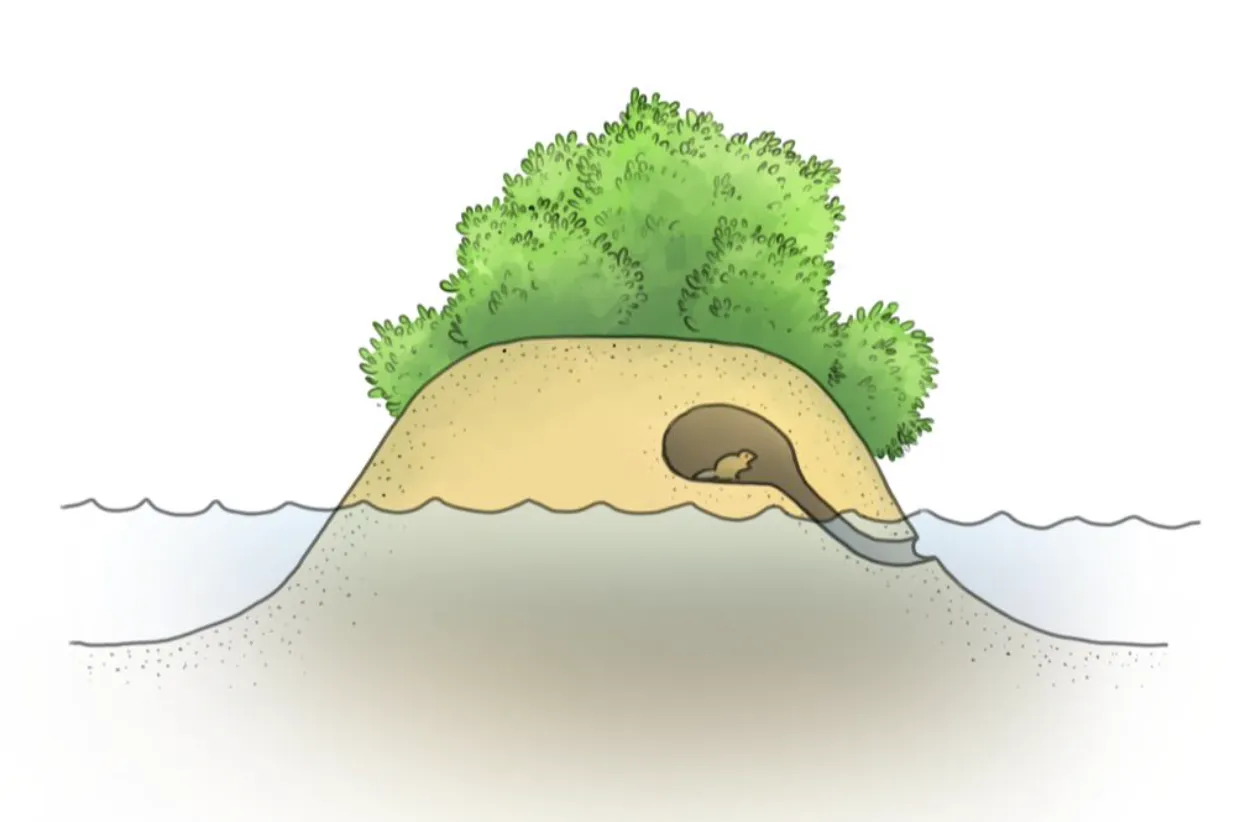
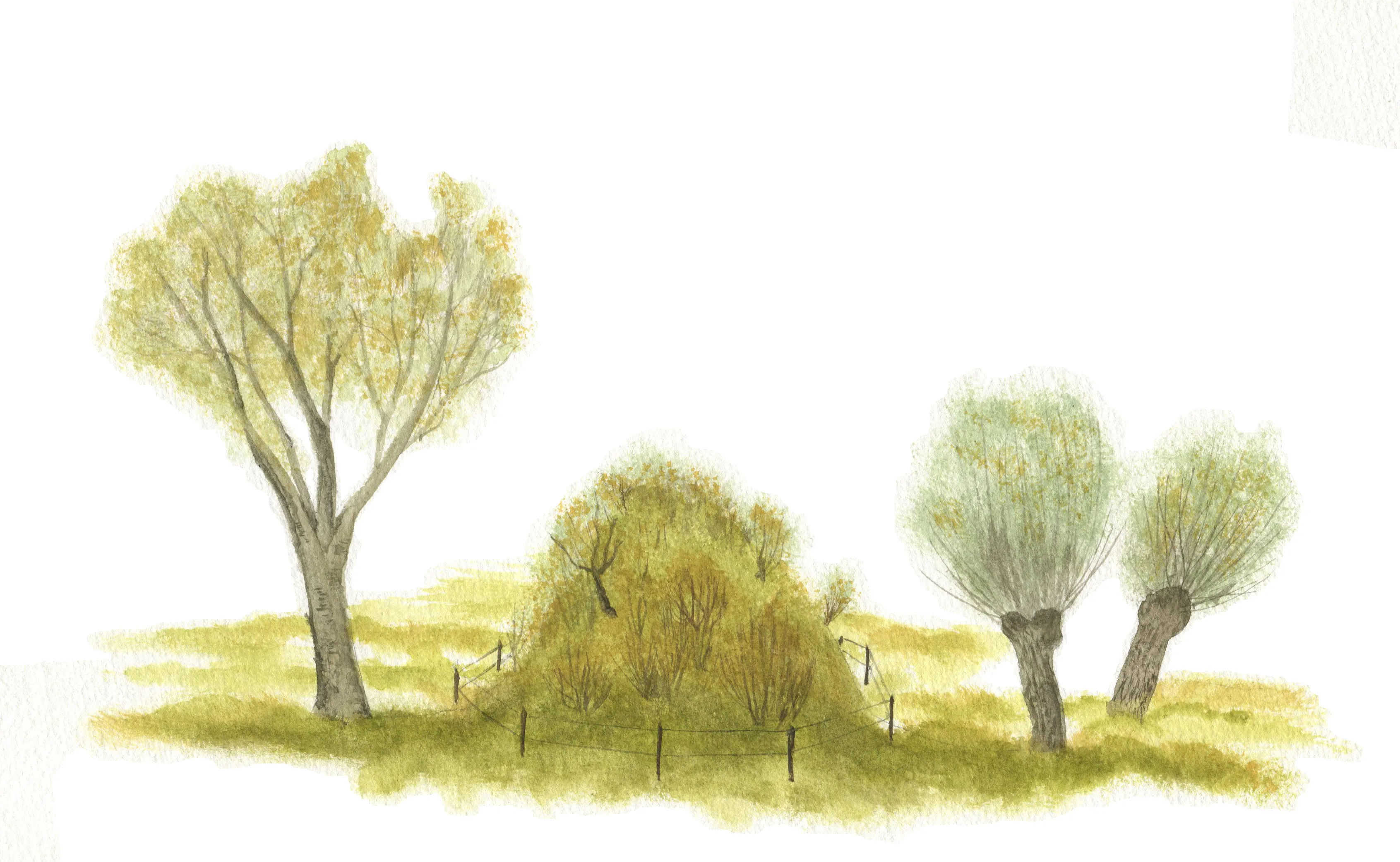
High-water island (Figure 1, 4, 5)
- Traditional HRP used in Europe for some time.
- A land mound where beavers can dig burrows during high water.
- Best for wide floodplains or forested wetland areas with minimal risk of water build-up.
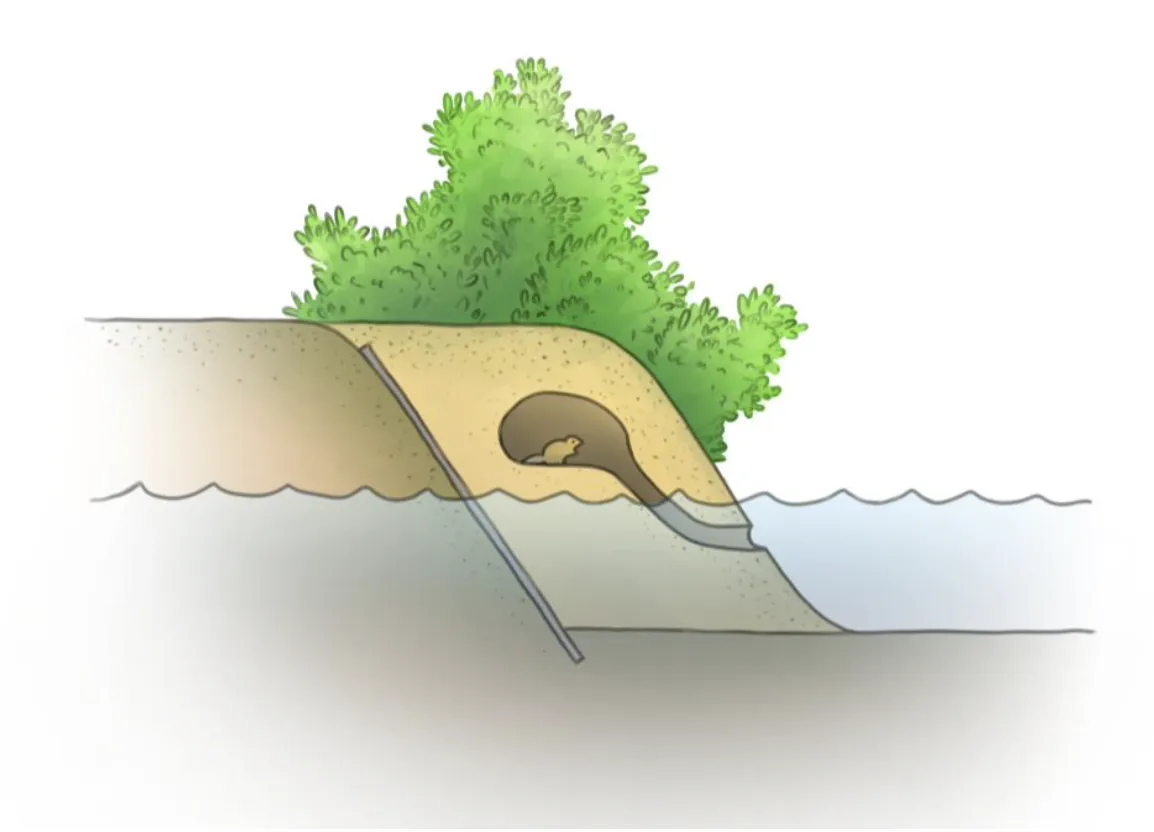
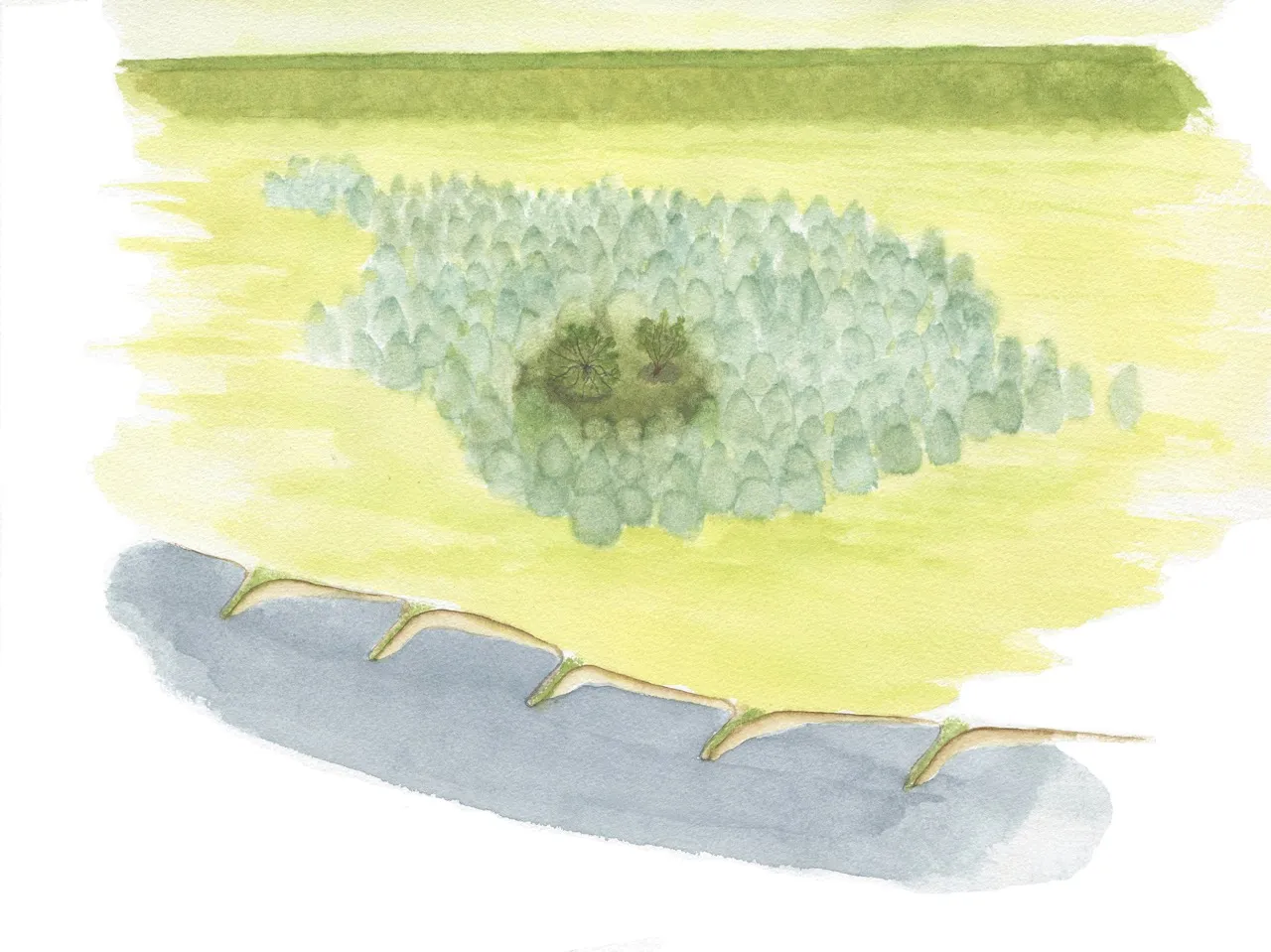
Dike-adjacent refuge (Figure 2)
- Built next to a dike, with protective mesh or sheet piling.
- When covered with rough vegetation and shrubs, this refuge is made more attractive than the surrounding dike.
- Useful when space is limited.
- Experimental and needs testing.
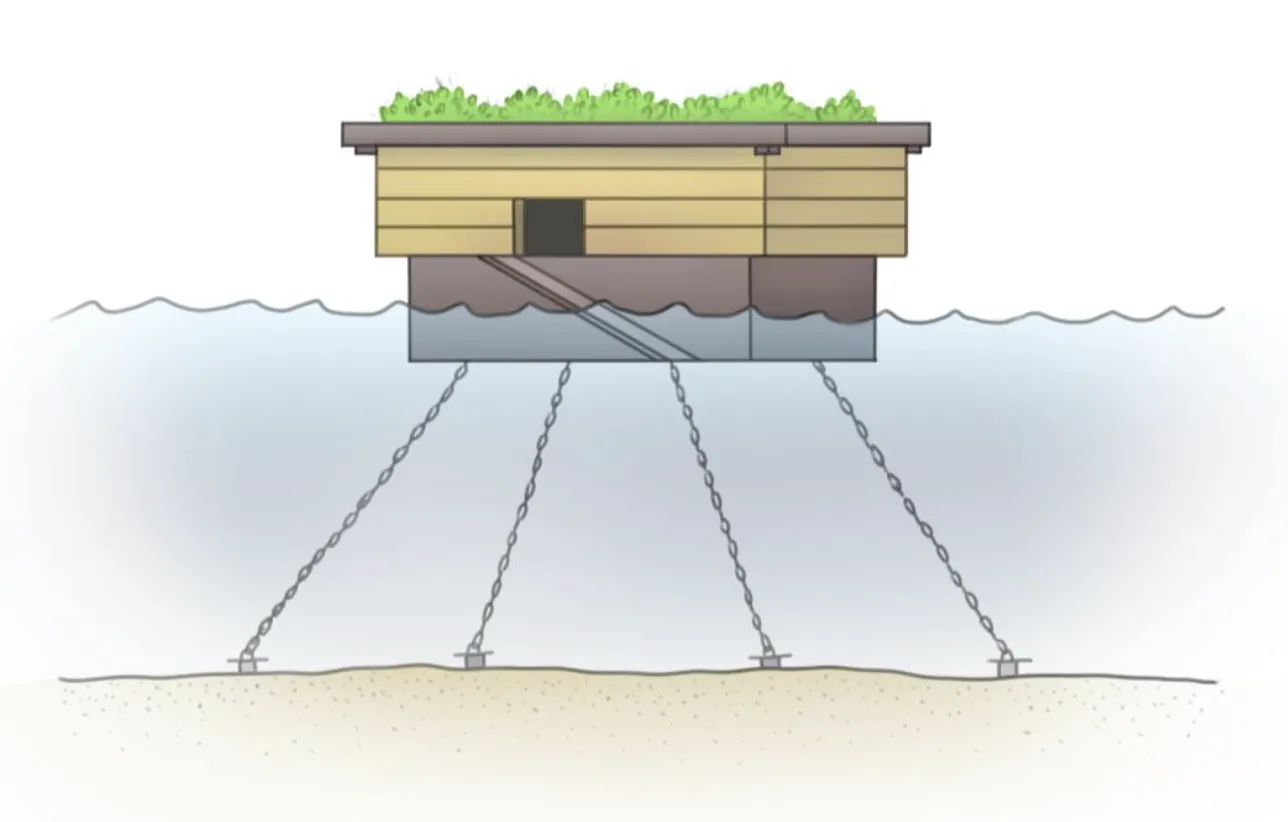
Floating refuge (Figure 3)
- A floating hut that provides shelter during floods and bad weather.
- Remains in place year-round.
- Experimental and needs testing.
Selection of a suitable HRP
Depending on the surrounding landscape, one can choose between a land-based HRP or a floating HRP.
Land-based HRPs
Pros:
- Durable over many years
- Low maintenance
- Feels natural and accessible to wildlife
Cons:
- Potential for water buildup (backwater effects)
- Reduction of area’s water storage capacity
- Sufficient space must be available
Options:
- Use high-water islands where there’s space and less concern for water storage capacity and backwater effect.
- Choose dike-adjacent refuges when:
- there are existing structures or past beaver damage on the dike.
- space is limited.
- a floating HRP is not possible.
Floating HRPs
Pros:
- Simple to build
- Easier to integrate into landscape
- No modifications to dike or soil needed
Cons:
- Must be well-anchored to avoid washing away during strong currents.
Use a floating HRP when:
- There is limited space and a land-based option causes a strong backwater effect.
- The beaver territory is near the river's edge, and other territories lie between this one and the dike.
- A water body that the beavers regularly use is present and includes a sheltered zone with vegetation - even during peak water levels (to ensure young beavers can safely reach the floating HRP).
What to consider
To select the best HRP type and location, assess these factors:
- Dike structure
- Water depth
- Maximum variation between normal water levels and high water
- Water flow - direction and speed - during different discharge levels
- Potential for water buildup (backwater effect)
- Floodplain layout and land use
- Surrounding roads, nature areas, and land ownership
- Required permits
Key considerations for constructing a HRP
- Height: Should rise at least 1 meter above expected water level, accounting for wind-driven surges. Total height depends on flood frequency.
- Shape: Use a long or teardrop shape to reduce water resistance and buildup.
- Surface area: At least 3 × 5 metres should stay dry during floods.
- Substrate: Heavy clay allows steeper slopes, resists erosion, and stabilizes beaver burrows.
- Location: Locate HRPs away from people and dogs for safety and to prevent disturbance.
- Badgers:
- Present in many floodplains and may dig into HRPs.
- Use heavy clay to discourage digging by badgers.
- In areas with badgers, build larger HRPs: minimum 5 × 20 metres of dry surface.
- Shelter from flow: Place in areas with slow currents—e.g., behind vegetation, in riparian woodland, or downstream of bridge piers.
- Vegetation: Plant dense shrubs like hawthorn for cover and stability. Shrub roots help anchor the soil.
- Livestock areas: Use fencing if HRP is in grazed land to prevent damage to the structure.
- Existing mounds: Old elevated sites (e.g., factory mounds, old brickworks) can be adapted into HRPs—modify according to the points above.
This information was adapted from a Dutch report Bescherm je dijk! bij R. Wolters, K. Schep, V. Dijkstra en E. Polman. Find the report here.