
Bank lowering or flattening
To prevent beavers from constructing a burrow or lodge on a bank—especially in places where they have previously dug—the bank can be lowered or flattened to make it less suitable for burrowing. When implementing this measure, consider creating an alternative lodge location.
Alternative lodge locationPage content
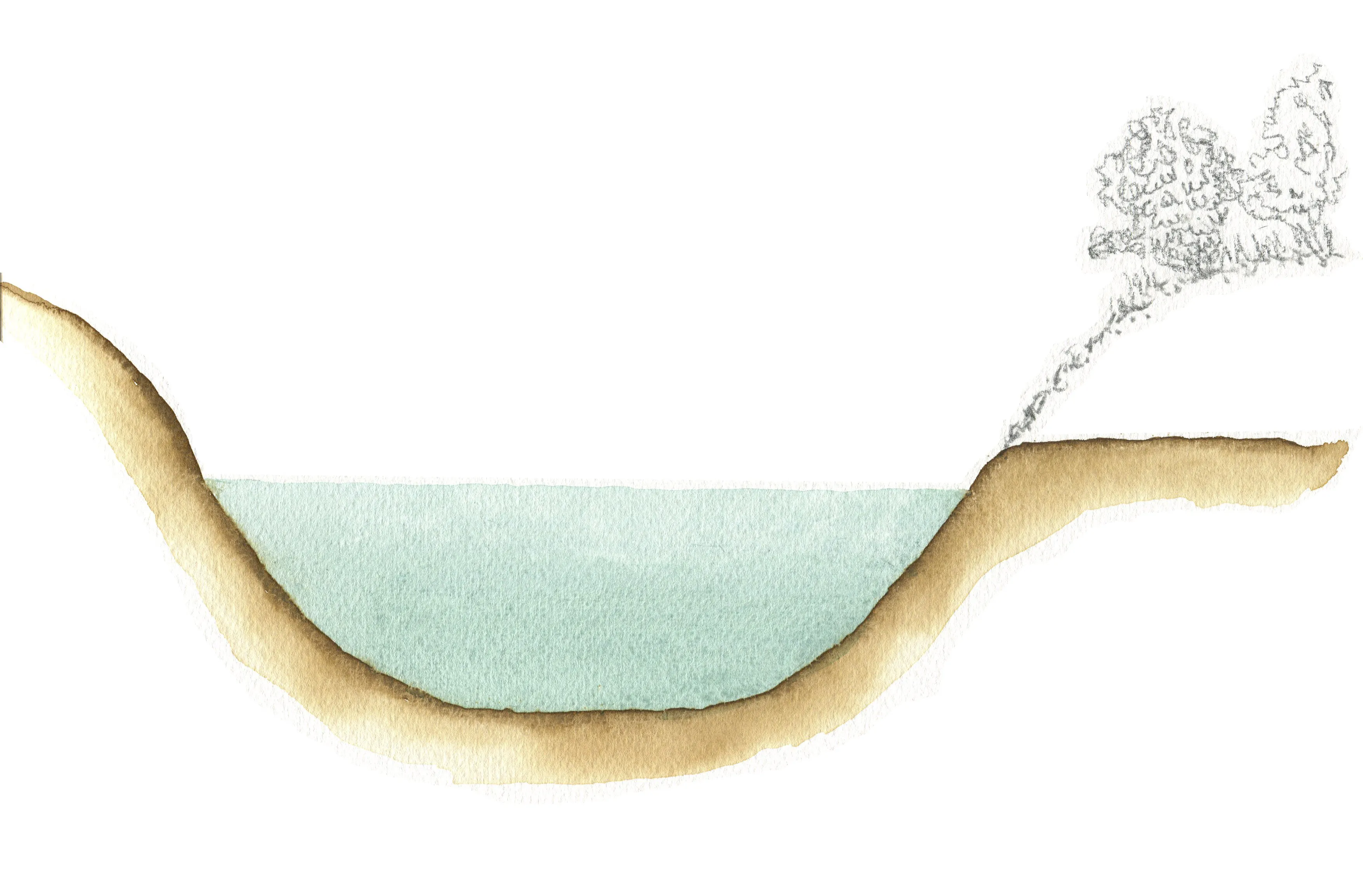
Lowering the Bank
Lowering should be carried out in such a way that beavers do not have enough vertical space above the groundwater level to excavate a chamber (Figure 1). If the ground level is no more than approximately 30 cm above the water level across a width of 5 to 10 metres, the likelihood of beaver burrowing is reduced.
Soil bearing capacity and machine weight must be taken into account when lowering a bank. On soft soils, heavy machinery may sink. In such cases, using lightweight equipment or dual wheels can be a solution.
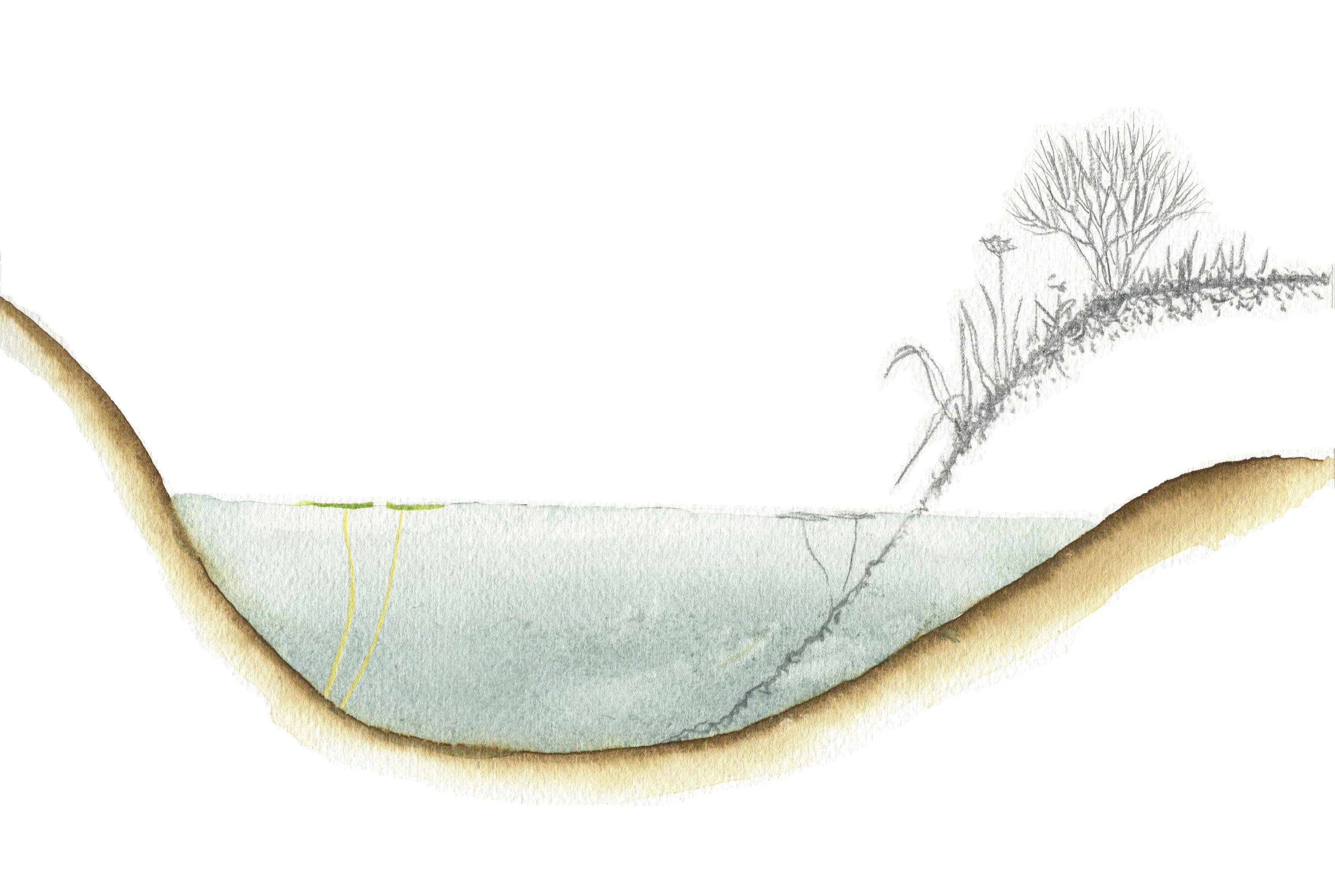
Flattening the bank
When flattening, the slope of the bank—both above and below water—should be designed so that no small, steep sections are left where beavers could easily start burrowing (Figure 2). The gentler a slope, the less attractive it becomes for burrow construction. A slope of 1:3 or gentler provides fewer burrowing opportunities than a steeper slope of 1:2 or 1:1. This method is most feasible in areas with more available space.
Caution during dredging
A watercourse may periodically need to be dredged. During such work, special care is needed along vulnerable banks to ensure that no underwater steep edges are created. These can become ideal underwater entry points for beaver burrows. In such cases, beavers may start burrowing several metres into the bank from below the waterline.