
Alternative lodge location
When a beaver lodge or burrow causes damage due to burrowing or damming in an unwanted location, an alternative lodge location can be created. This measure is especially advisable when other locations are removed or made unsuitable for the beaver.
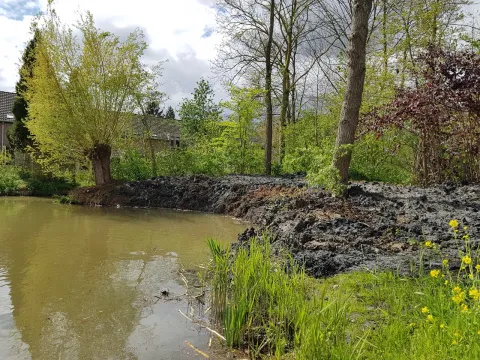
© W. Overman
Page content
If a beaver has built a lodge or burrow in an undesired location—or if you want to prevent one from being created—it's important to make the site unsuitable. This can be done by opening and filling the lodge or burrow, using mesh, sheet piling, or stones, and by lowering or flattening the bank or even relocating the watercourse.
Providing an alternative location
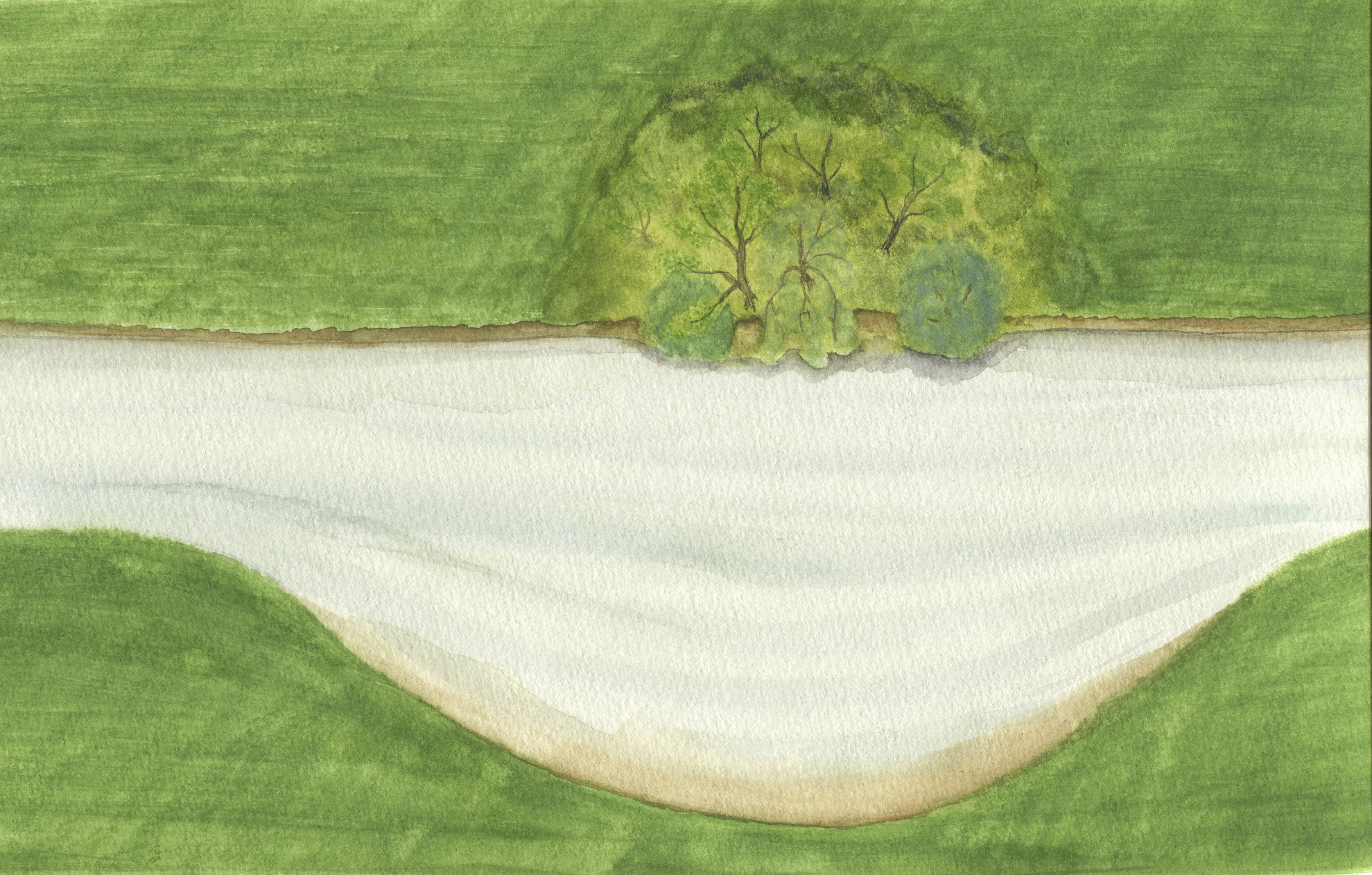
At the same time, it's helpful to create a more suitable lodge site elsewhere within the same beaver territory, but in a less vulnerable location (Figures 1, 2, and the top photograph which shows a newly created alternative lodge location). Experience shows that beavers will attempt to build a lodge or burrow in a suitable environment even if the bank is not ideal. To guide them to a preferred site, a stretch of bank can be designed with the following features.
- Steep banks
Steep, elevated banks (that also continue steeply below water level) are preferred for digging burrows or building lodges.
Note: Where machinery or vehicles must pass, do not create steep banks within 15 to 20 metres of the water. Keep those banks low and gently sloped. One option is to make one bank shallow with a maintenance path and design the opposite bank higher (about 1 metre) and steeper, discouraging vehicle access. - Woody vegetation
Planting preferred woody species— softwood trees like willow and poplar—makes the area more attractive to beavers. Additionally their roots help stabilize the burrow roof while also offering cover and food. - Water depth
Beavers prefer a water depth of at least one metre at lodge or burrow sites. In shallow or flowing water, they may build a dam to raise the depth. Deepening the streambed at the intended site can reduce the likelihood of dam building and the resulting waterlogging.

Suitable locations
Certain natural or modified features are particularly attractive as lodge sites.
- Waterway junctions
These allow for the construction of multiple entrances in different directions. You can also create this effect by connecting a side channel or pond. - (Pen)insulas
These provide additional options for multiple entrances. - Side channels
These are highly suitable for creating alternative lodge sites. To prevent siltation of the necessary 1-metre deep excavation, a small upstream sill can be installed. The sill height depends on the water level at which the side channel should begin to carry flow. This method can also discourage dam construction elsewhere in the watercourse.