
Wire mesh
Banks and infrastructures can be protected with wire mesh from beavers burrowing and building a lodge or burrow in an unwanted location. When implementing this measure, consider creating an alternative lodge location.
Alternative lodge location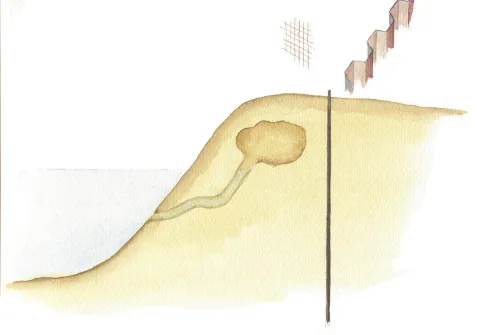
© D. Klees
Page content
Wire mesh can be used as a preventative measure to protect banks and infrastructure from beaver burrowing, both on a small scale and in more extensive applications (Figure 1).
Small-scale application
A common small-scale measure is placing wire mesh (maximum mesh size 15 × 15 cm, minimum thickness 2 mm) behind small structures, such as a burrow or lodge. This helps prevent further burrowing. The mesh should be installed at least 1 metre below the normal water level, depending on the waterbody, bed slope, and water level fluctuations.
Large-scale application
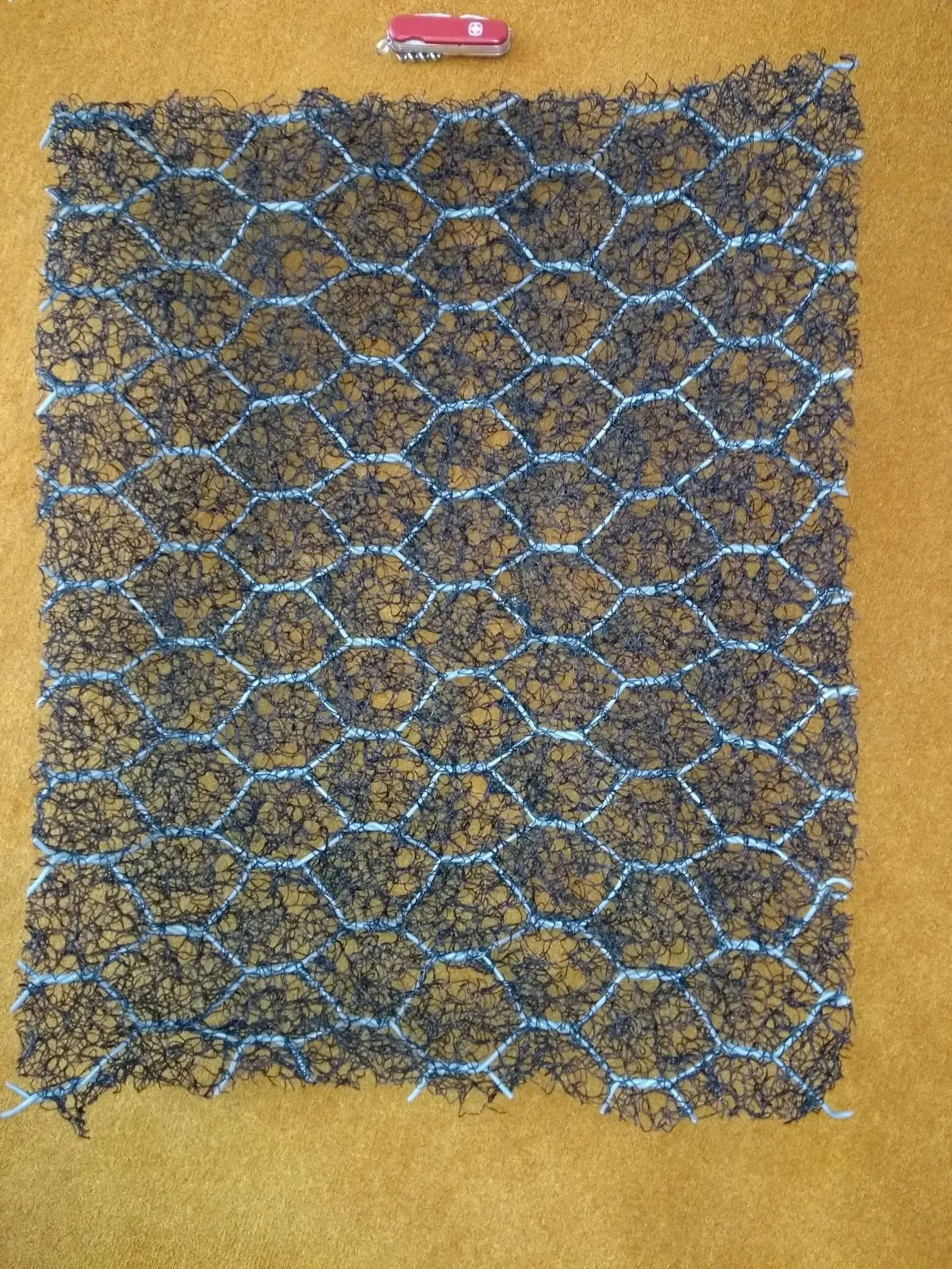
Wire mesh can also be used on a larger scale to protect banks from beaver activity. It should be installed just below ground level and extend to a depth of at least 2 metres, or reach the bottom of the watercourse (Figure at the top). Angled installations using plastic mesh networks can help prevent soil slippage but are more expensive.
Mesh along the bank
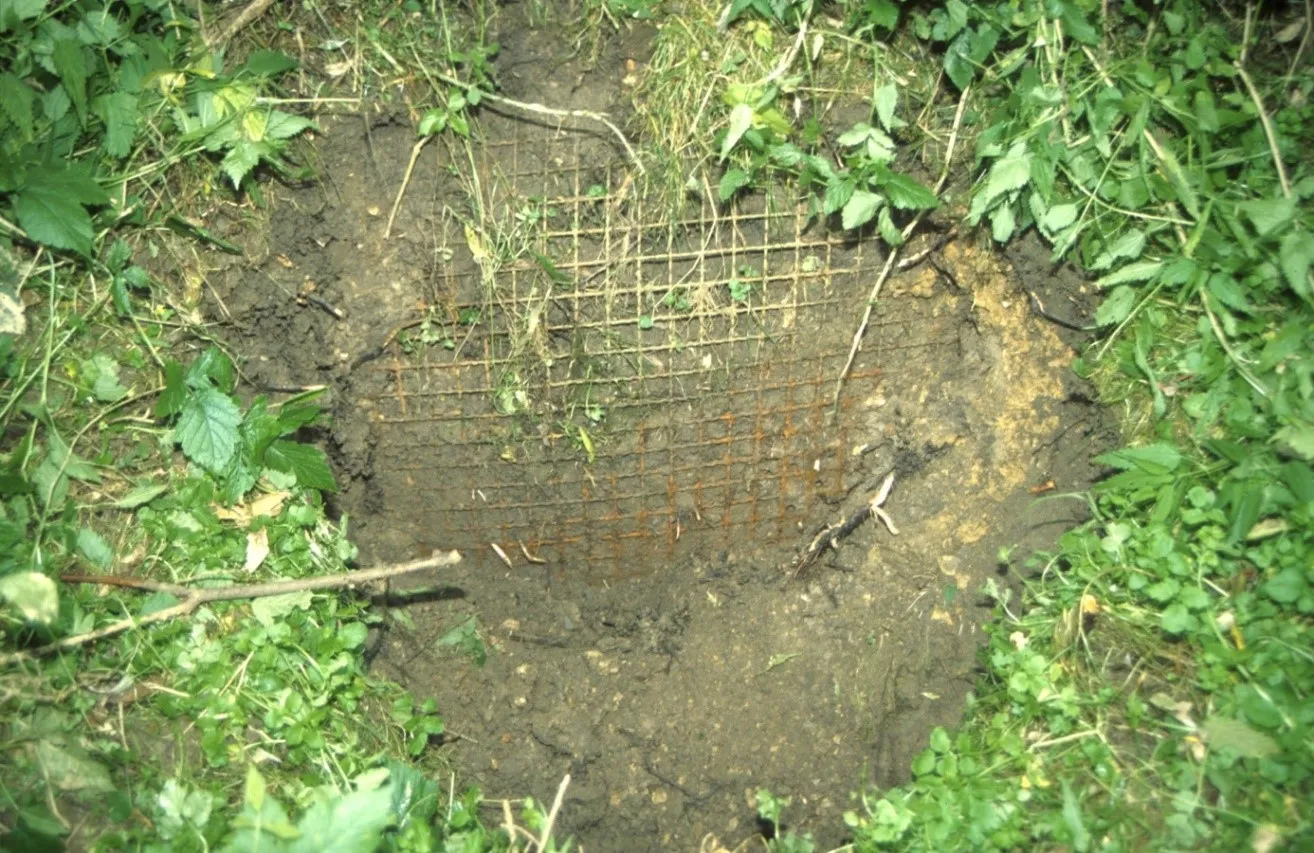
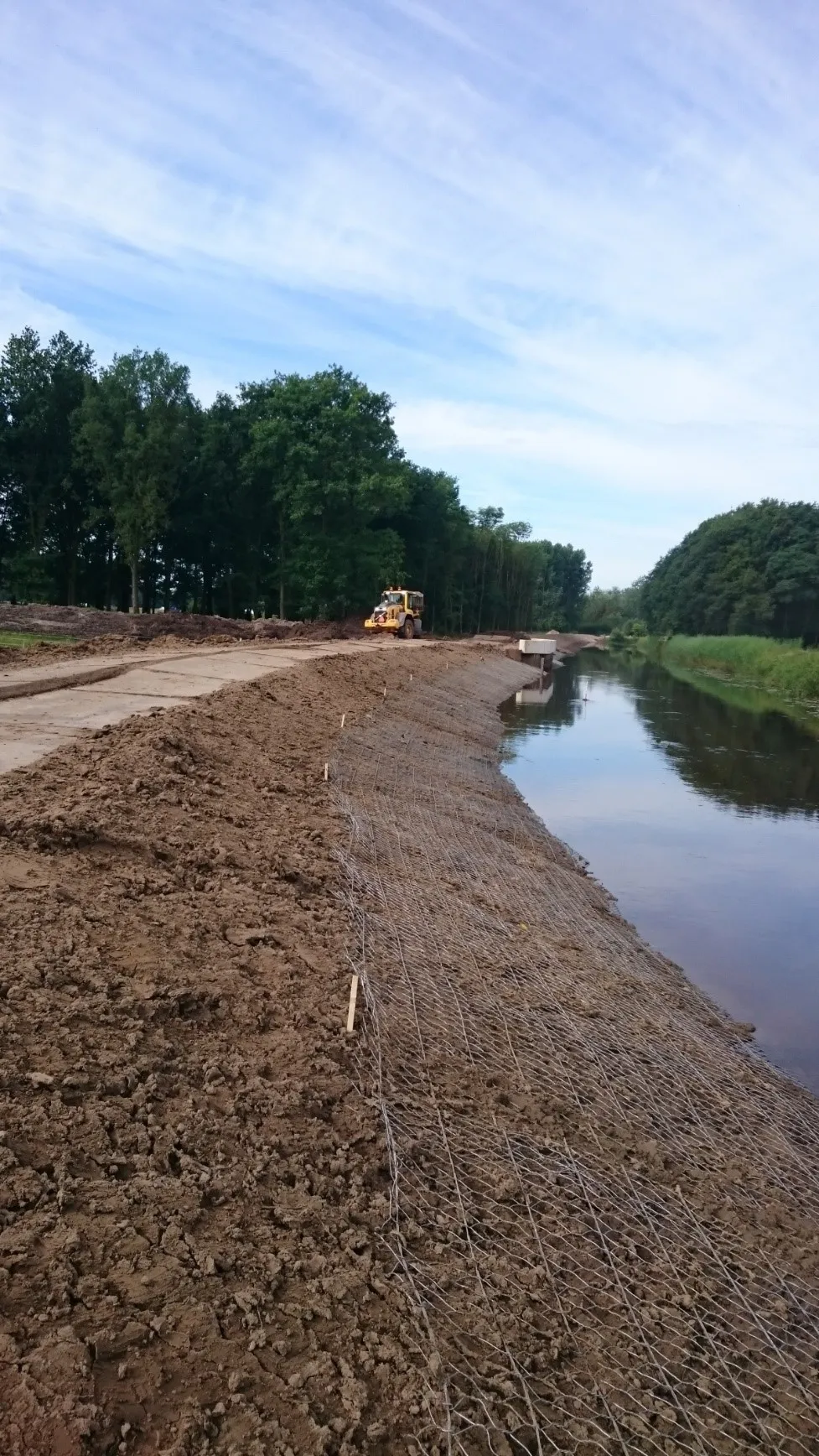
Wire mesh or concrete reinforcement mesh is sometimes placed along bare banks (Figure 3). However, this is generally ineffective in vegetated areas with trees or shrubs, as beavers can dig around them. To prevent burrowing, the mesh must be buried deep enough. A more effective approach is to create a shallow, permanently wet forebank (wetland) 5–10 metres wide, underlaid with mesh, making the area less attractive to beavers.
Recent developments
Installing vertical mesh is not easily done using an excavator that digs a trench. In practice, trenches often collapse quickly—especially in sandy soils or below the groundwater level. Several pilot projects have recently explored solutions. The key is to minimise the time the trench remains open, or to install mesh using specialised equipment.
Method for clay soils
A narrow, elongated steel box (2 metres high) has been developed for clay soils. A roll of mesh is mounted inside the box, which is placed in a trench. The trench is then extended in front of the box, which is pulled forward, unrolling the mesh as it moves. The trench behind the box is immediately backfilled (see this video in Dutch). This method is likely unsuitable for sandy soils due to their higher risk of soil collapse.
Vertical mesh installation in sandy soils
In both Germany and the Netherlands, techniques have been developed to install flexible mesh vertically into the bank to depths of up to 4 metres—even in sandy soils. It is expected that both approaches can effectively protect banks from beaver burrowing.
One method has been used in Germany for several years to prevent beavers from burrowing into vulnerable banks. The mesh is driven into the ground to a depth of up to 4 metres using a vibrating block. Another method involves pressing the mesh into the ground to a depth of over 3 metres. The mesh is protected on three sides and pressed into the ground with sufficient overlap, forming a durable, continuous mesh barrier.