Sheet piling
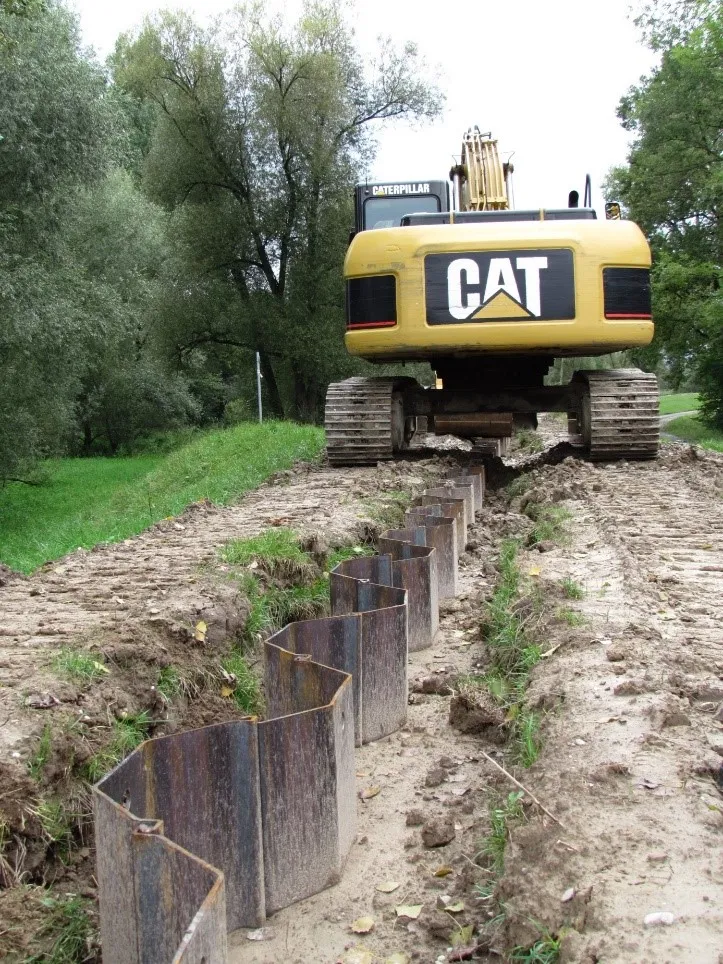
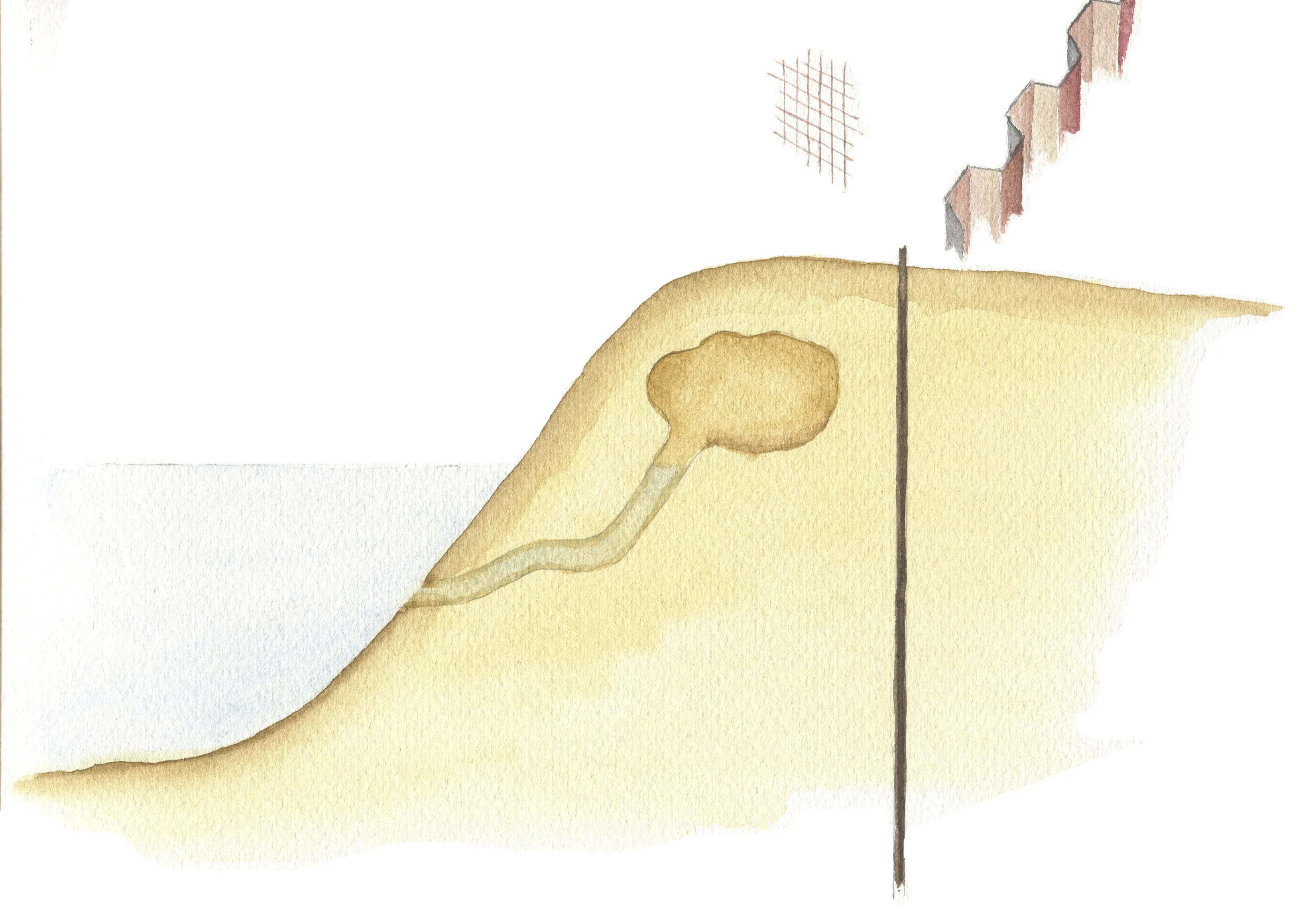
Sheet piling can prevent beavers from burrowing by making the location unsuitable for a beaver burrow. Sheet piling needs to be installed sufficiently deep to be effective and creating an alternative lodge location should be considered.
Alternative lodge locationPage content
One possible measure to prevent beaver burrowing is the installation of steel sheet piling. These interlocking metal plates are driven into the ground to act as a physical barrier. It's important that the sheet piling is installed deep enough to prevent beavers from digging underneath. It should extend at least to the bottom of the watercourse (Figures 1 and 2). Special attention is needed at the beginning and end of the sheet pile wall, as beavers often attempt to burrow at these vulnerable points.
Use of wood
Wooden sheet piling or revetments are not suitable to prevent beaver burrowing. Beavers can easily gnaw through wood. In addition, wooden revetments are often not installed deep enough, allowing beavers to dig beneath them. These areas may even attract beavers, as the revetments often increase the local water depth.
Use of plastic
Some assume that seepage barriers can stop beavers. However, this is a risky assumption. These barriers are often made from thin plastic sheeting, only a few millimetres thick—easily chewed through by beavers. Plastic planks are also ineffective as a deterrent.