
Increased vegetation distance from roads or railway
Increasing the distance of vegetation near roads and railways can prevent damage from vegetation that has been gnawed on by beavers.
Page content
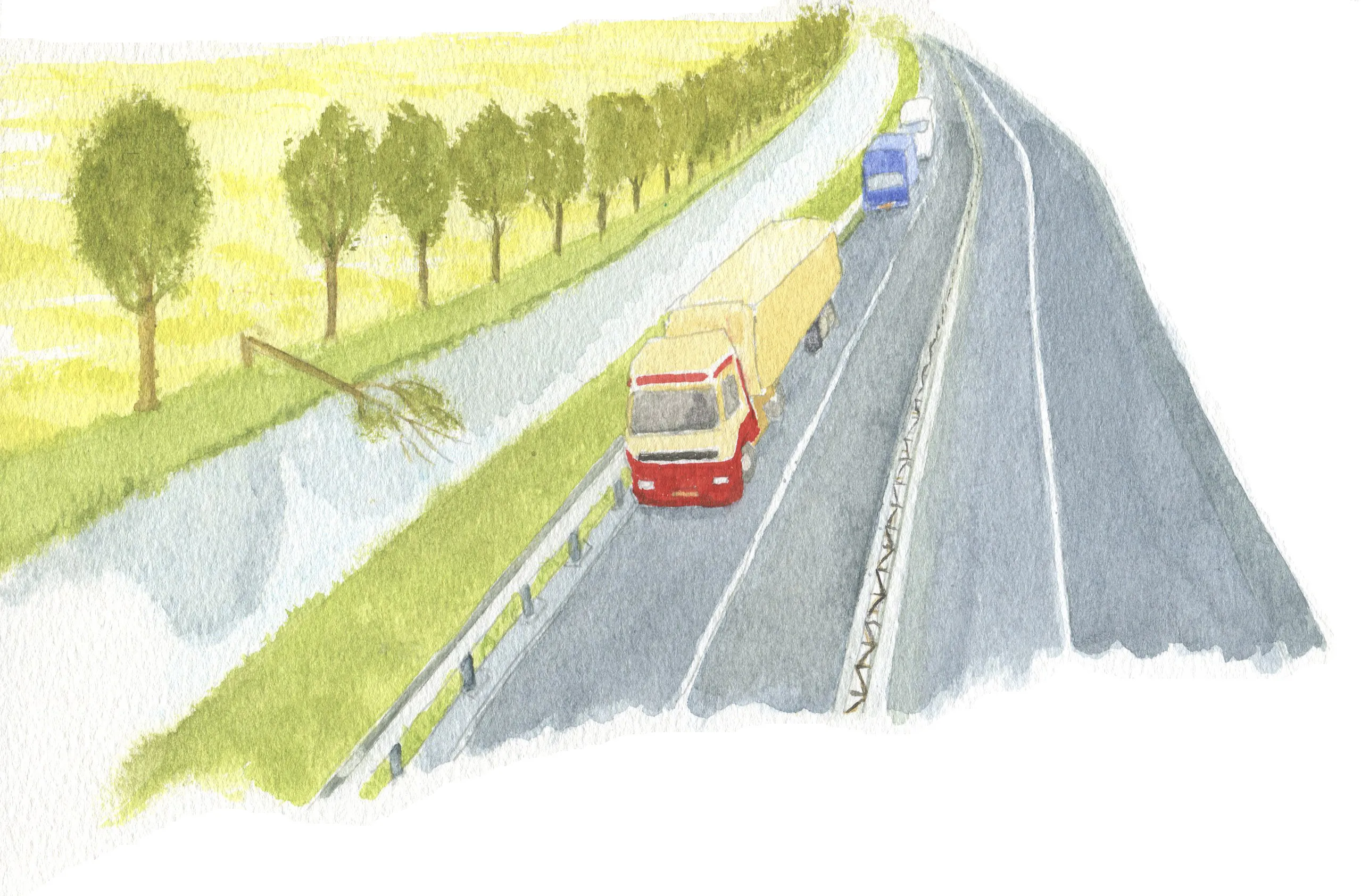
Beavers gnawing on trees and shrubs near roads and tracks can cause the vegetation to fall and/ or block access. Therefore, it is important to plant new trees and shrubs at a sufficient distance from roads or railways in areas where beavers are present (noticeable gnawed trees) or where beavers might settle in the future (Figure 1).
In the 20 to 30 metre zone along the waterway where beavers can access the trees, the trees should be planted at a distance to the road or railway that is not smaller than the maximum growth height of the tree species, including a 5 metre buffer. For example, a tree that could grow to a 25 metre height should be planted at least at a 30 metre distance from a road or railway.
Indications for maximum tree height for species regularly foraged by beavers:
Oak (Quercus sp.): 35 m
European beech (Fagus sylvatica): 35 - 40 m
Elm (Ulmus sp.): 35 m
European ash (Fraxinus excelsior): 35 m
Black alder (Alnus glutinosa): 25 m
Birch (Betula sp.): 25 m
Willow (Salix sp.): 30 m
Poplar (Populus sp.): 30 m
Beavers forage on black alder occasionally, yet not in large quantities due to its toxic properties. When only shrubs are planted, a minimum distance of 20 metres should suffice.
Using mesh or fences
As an alternative solution fences could be placed that prevent the beavers from accessing the area or mesh could be constructed around particular trees.
Providing other locations
To prevent beavers from foraging on trees and shrubs in a certain area, placing attractive tree species - such as willow and poplar - in other adjacent areas can help to create advantageous alternative locations within the beavers’ territory.